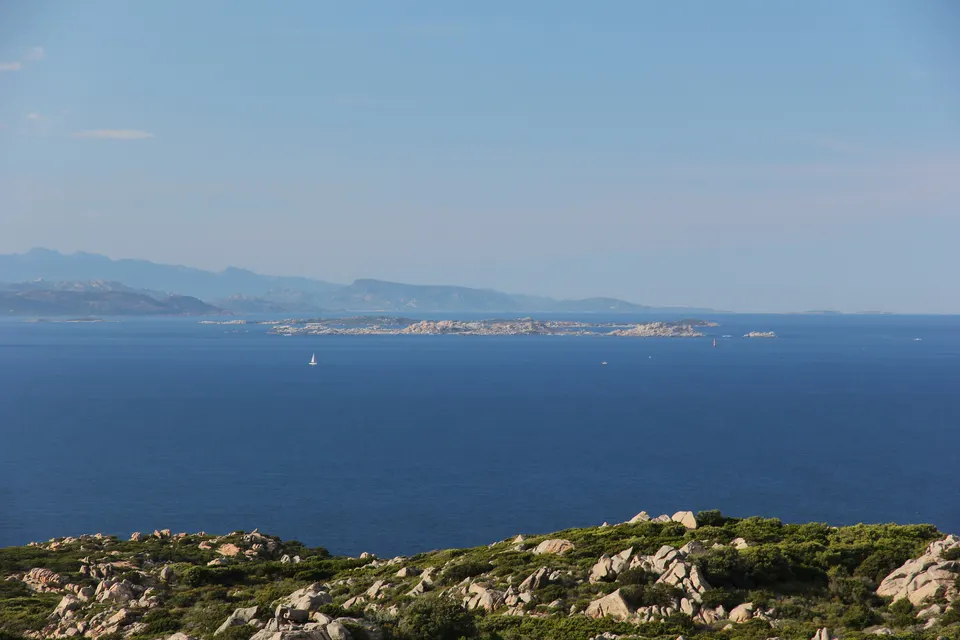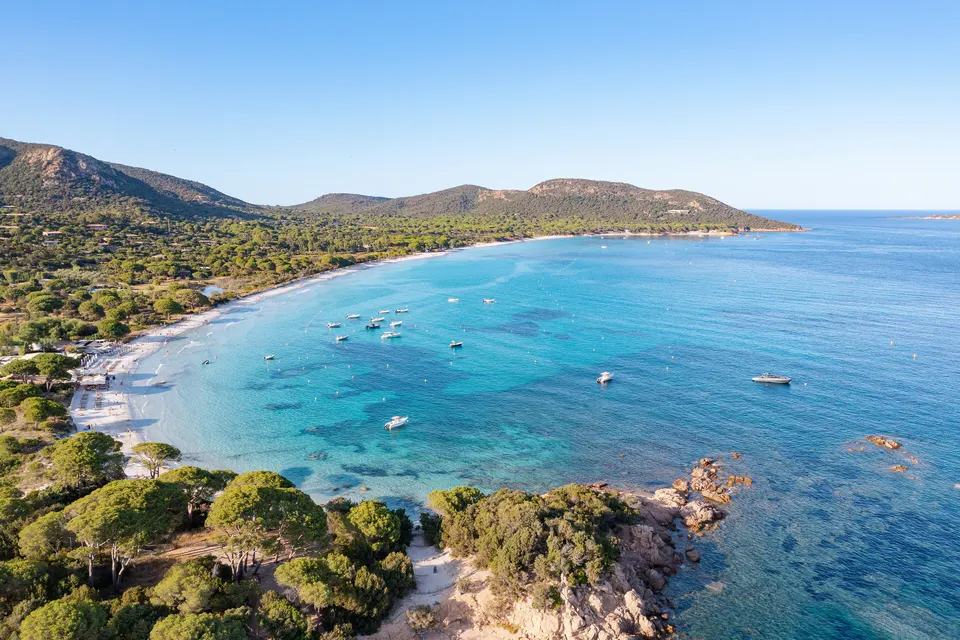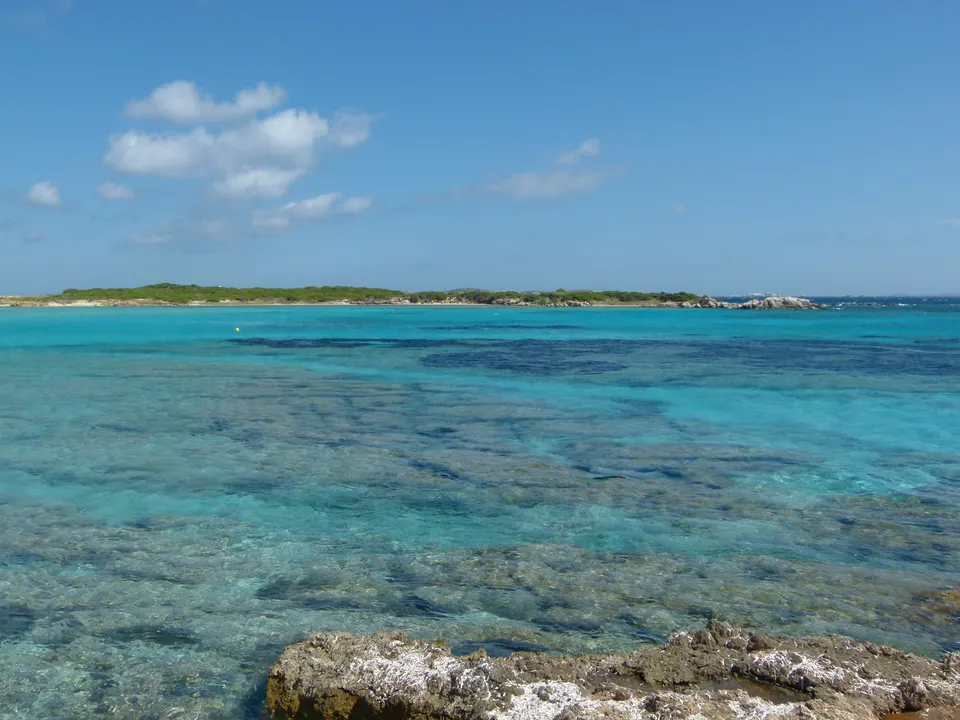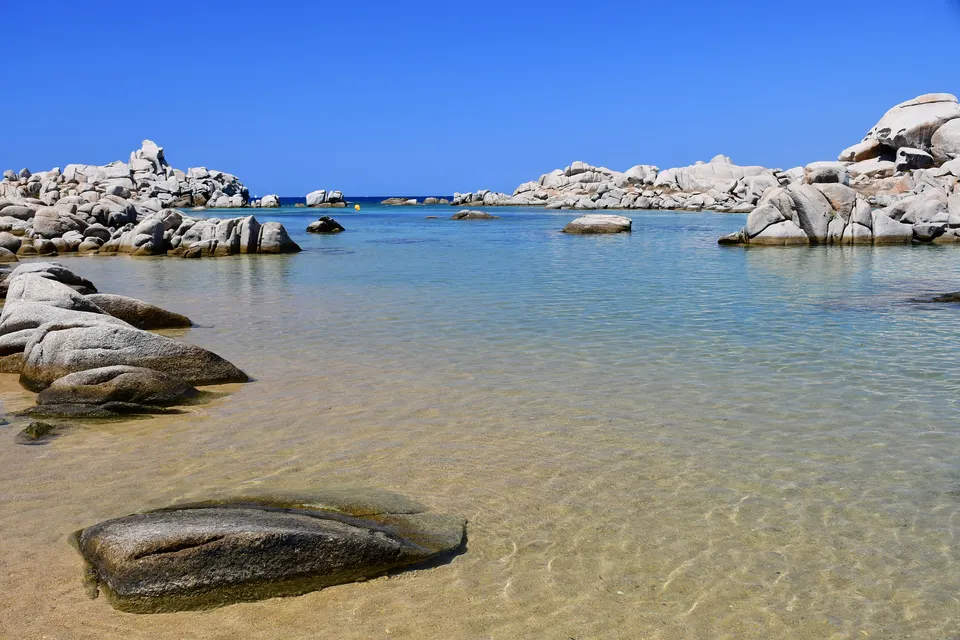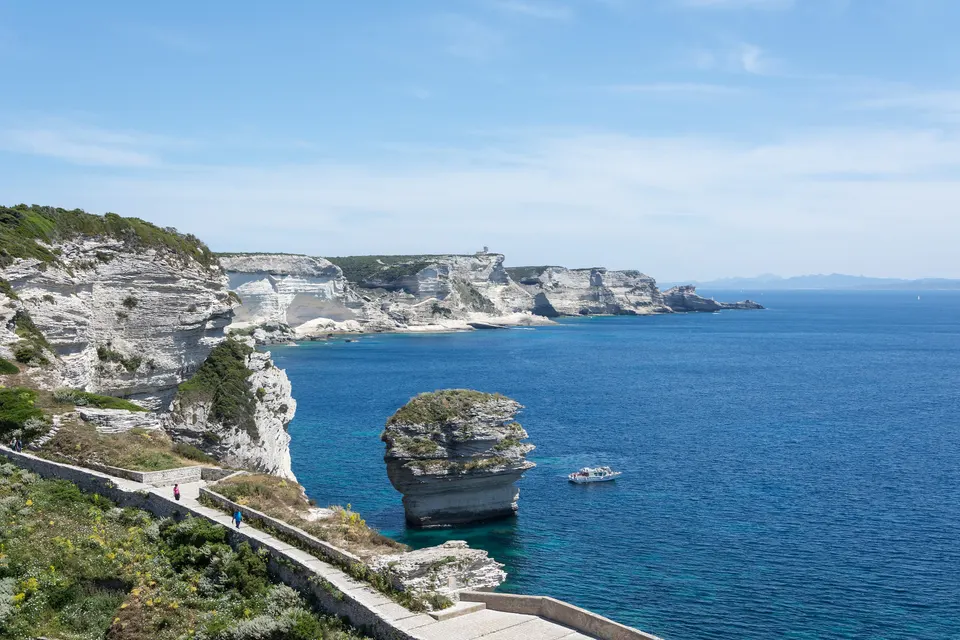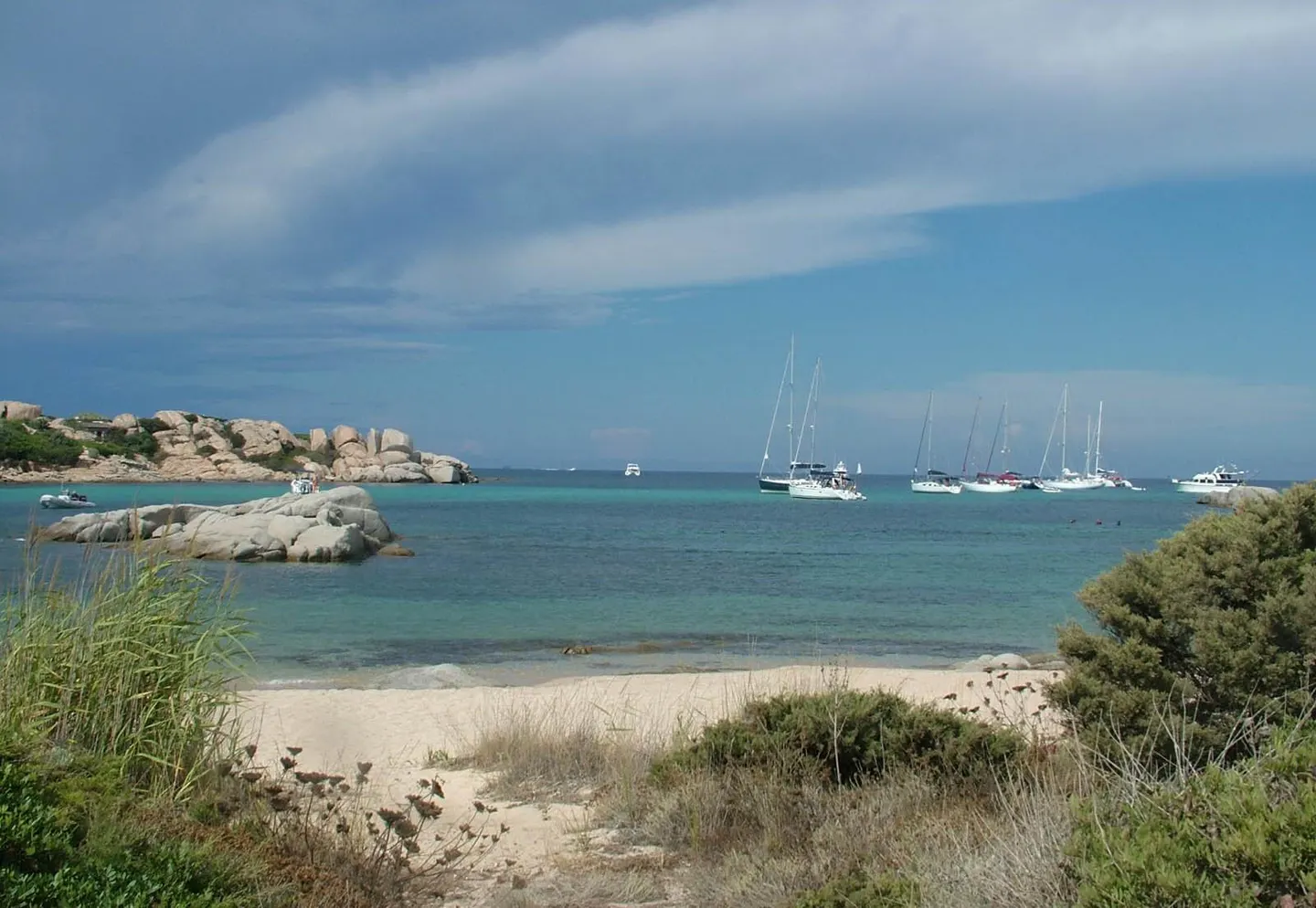
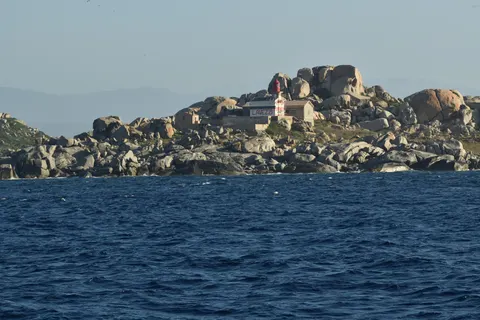
Cavallo (Cavaddu in Corsican) is the largest island in the Lavezzi archipelago, at 120 hectares, and the only inhabited one. It has been private since 1967 and is not part of the nature reserve; boat trips sail past without landing. The other islands are Lavezzu, where visitors land, Piana, also open for landing on its marked beaches, and the Ratinu, Sperduti and Purragia islets, closed to protect seabirds.
Key facts
- Cavallo: 120 ha, the only inhabited island, private, outside the nature reserve.
- You sail past Cavallo; public trips do not land there.
- Lavezzu, Piana and the Pyramid islet: landing allowed on marked beaches and paths.
- Ratinu, Sperduti, Purragia: sailing and anchoring banned around them.
The islands of the archipelago
| Island | Status | Landing |
|---|---|---|
| Cavallo (Cavaddu) | private, inhabited, outside the reserve | not on public trips |
| Lavezzu | reserve, owned by the town of Bonifacio | yes, marked beaches and paths |
| Pyramid islet | reserve, Sémillante memorial | yes, marked beaches and paths |
| Piana | reserve | yes, marked beaches and paths |
| Ratinu, Sperduti, Purragia | reserve, seabird areas | no, sailing and anchoring banned around them |
Cavallo in brief
Cavallo lies 2.3 km off the coast, east of Cape Sperone and Piantarella. At 120 hectares it is the largest island in the archipelago and the southernmost inhabited place in mainland France.
- A Roman quarry: around the 2nd century, the Romans quarried granite here, as on the neighbouring islet of San Baïnsu. The site has been a listed historic monument since 1992.
- A lone shepherd: after the Romans, the island stayed empty until 1800, when a shepherd settled there with his flock.
- The billionaires’ island: in 1967, businessman Jean Castel bought the island to turn it into a luxury resort. Villas, a harbour, a marina and a small airstrip (closed in 1988) followed from 1970.
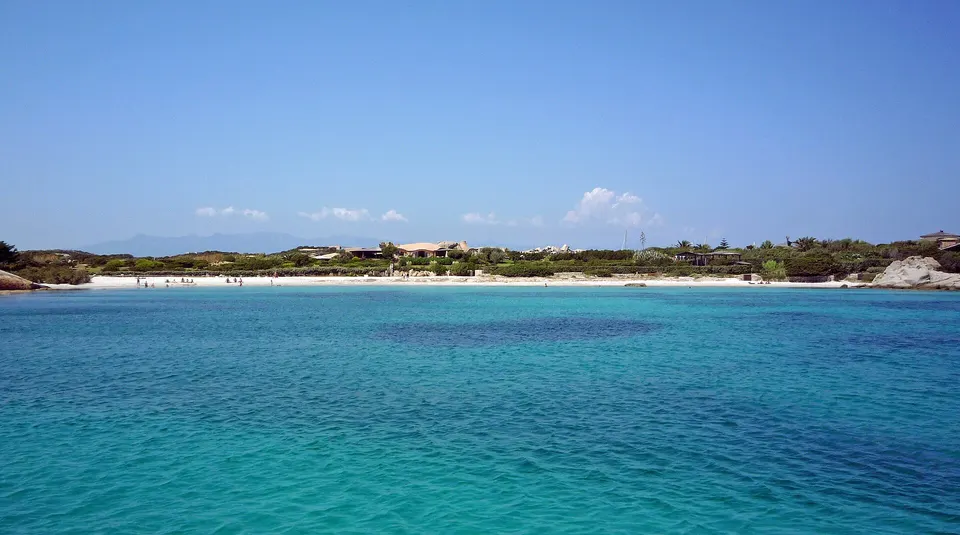
Seeing Cavallo
Most Lavezzi boat trips pass Cavallo, notably the “Lavezzi and Cavallo” afternoons from Porto-Vecchio and SPMB circuit no. 3 from Bonifacio. With a hired boat you can sail round it, respecting the anchoring areas: see boat hire.
An archipelago once joined to Corsica
During the last ice age, the sea was about 100 metres lower: Cavallo, Lavezzu and Ratinu formed a dry passage between Corsica and Sardinia. Prehistoric rock shelters have been found on both Cavallo and Lavezzu. The Pyramid islet carries the memorial to the victims of the Sémillante. The islets closed to the public are now seabird refuges: see the reserve rules.
Book a trip
Trips that sail past Cavallo
 Half-day: relaxing afternoon to the Lavezzi and Cavallo Islands4 hours★ 4.7 (103 reviews)from €90Check availability
 Private Boat Trip to Bonifacio, Lavezzi, Cavallo and Isola Piana4 hours★ 5.0 (2 reviews)from €849 per groupCheck availability
 From Bonifacio: Lavezzi Islands Half-Day Boat Tour3 hours★ 4.8 (229 reviews)from €60Check availability
"From" prices checked on 9 November 2026 and may have changed.
Affiliate links: IlesLavezzi.com earns a commission if you book, at no extra cost to you. "Show live prices" loads the GetYourGuide module, which sets its own cookies (learn more (in French)).
Frequently asked questions
Can you visit Cavallo island?
The island is private. Public trips sail past and tell its story without landing. Yachts can use its private harbour, on its own terms.
Why is Cavallo called the billionaires' island?
Since the 1970s, luxury homes have been built there for wealthy or famous owners, which earned it the nickname, according to Wikipedia.
Is Cavallo part of the nature reserve?
No. The boundary of the Bouches de Bonifacio nature reserve excludes Cavallo island.
Sources
Information checked against the sources below. Timetables, prices and rules change: confirm before you go.
- Wikipedia (French), Île de Cavallo, accessed 9 November 2026
- Wikipedia (French), Bouches de Bonifacio nature reserve: boundary, accessed 9 November 2026
- Decree of 23 September 1999, article 26: landing (in French), accessed 9 November 2026
- Corse Net Infos, closure of the Ratinu, Sperduti and Purragia islets (30 April 2023, in French), accessed 9 November 2026